MINI-VAC
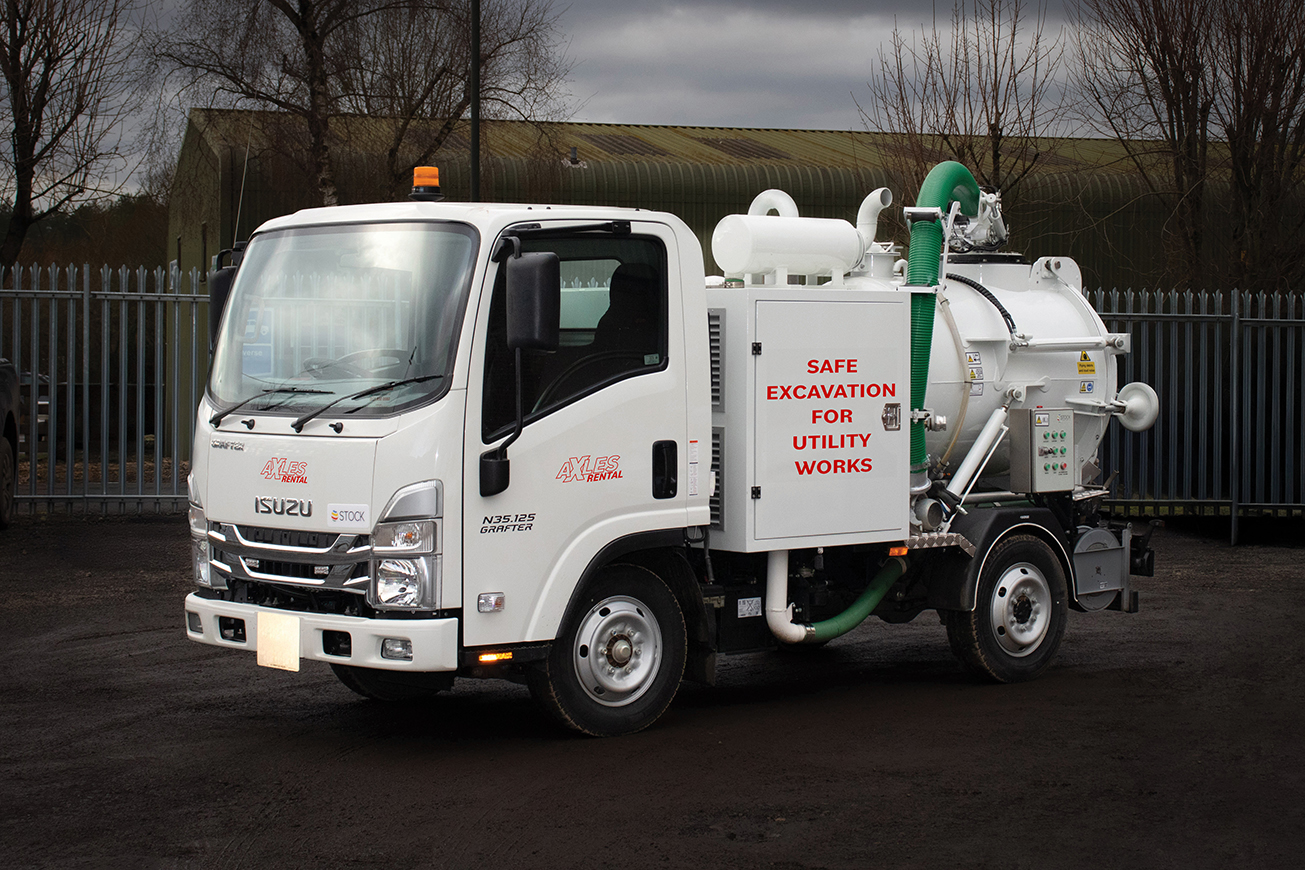
The Mini-Vac is the smallest and most manoeuvrable machine, ranging from 3.5 – 12t, it’s perfect for small to medium sized excavations. Designed to tip the spoil into tonne bags which are left neat and tidy on the side of the street for later collection.
Axles Rental are the first company to provide Hydro-Vacuum excavation equipment in the UK, available to the market place through convenient contract hire packages. We are able to ensure that all the advantages of Vacuum excavation, and the extra advantages that Hydro-Vacuum excavation equipment offer, is affordable to everyone who needs to excavate Safely in the vicinity of buried services.
Truck Chassis: 3.5 – 7.5 and 12t
Kohola Auxiliary Engine: EU Stage v 42Kw (56hp) @ 2600rpm
Hopper/Sludge tank: Mild Steel 1050 Cylindrical (700L Sludge containment) Hydraulically Operated tipping
Sludge Tank Rear Door: Spherical, Top hinged Heavy Duty Ram Hydraulically opened + manual Safety locks, water tight sealed with Neoprene door seals.
Clean Water Tank: 350 Litres light Weight Rectangular transparent LLDPE with UV resistance
High Pressure Water System: Speck 25l/min at 250bar
Hose Real: 3/8” hose 8 meters
Oscillating lance
Standard wash down lance
Over Head Suction: The Over head wander Hose, 3 meter boom hose, NS Parking with Slew
Special Rear Tipping: 500Ltr dumpy bag tipping facility fitted as standard
Frequently Asked Questions:
What is Vacuum Excavation?
Vacuum excavation is a relatively new process of non-destructive digging, by way of using pressurised air or water to safely agitate and dislodge the ground, then removing loose material via a high powered vacuum suction hose into a storage tank.
Why is it used?
Primarily used when excavating sensitive areas in the ground such as around utility lines, pipelines, or tree roots, it is by far the safest, quickest and most environmentally friendly way of exposing buried utility services, as opposed to using conventional hand or machinery digging methods, vastly reduces or eliminates utility service strikes, reducing manual labour and associated risk from injury, reducing damage to wildlife and consequential downtime.
What makes it the safest way of excavating?
It’s a more precision dig compared to traditional mechanical digging, reducing the chance of error. Personnel are not required to be inside the hole during the process, avoiding risk from direct physical contact with the ground or buried services. Manual labour is massively reduced, leading to less fatigue or injuries. Surrounding area is kept clean of debris and free from hazards. Service strikes can occur in seconds with a spade or mechanical machinery, while a Vacuum excavator will gently but quickly reveal underground services without any or little contact, leaving them safe and undamaged, to then assess and repair as required.
What are the effects of a Utility Service strike?
The health and safety impact of a service strike can reach far beyond the immediate working area, causing risk of injury to workers whilst posing a significant risk to public further afield. The environmental impact can be colossal, causing contamination to soil, the watercourse, including storm drains, ditches, rivers, potentially catastrophic to wildlife and the ecosystem. The cost of completing a remedial repair to a damaged utility is negligible when compared to the wider financial impact, which is much harder to quantify.